


Start hereSupplement labels
How to Read a Children’s Supplement Facts Label
A practical framework for reading serving size, nutrient amounts, Daily Values and other ingredients before comparing children’s supplements.
Pediatric Nutrition Library
Evidence-informed pediatric nutrition articles designed to help families understand age, diet, nutrients, ingredients and supplement decisions more clearly.

 Offer new foods again and again.Many children need 8 to 15 tries before they accept a new food.
Browse by age
Start hereSupplement labels
A practical framework for reading serving size, nutrient amounts, Daily Values and other ingredients before comparing children’s supplements.

From the Pediatrician
How to evaluate added sugar, gummy formats, dental exposure and the rest of a children’s supplement label without overstating one feature.

From the Pediatrician
A cautious, food-first explanation of prebiotics, probiotics, strain specificity and why broad gut-health promises deserve scrutiny.

From the Pediatrician
An attainable school-morning framework built around sleep, breakfast, hydration, preparation and consistency.

From the Pediatrician
A practical framework for looking beyond a formulation claim to the child’s age, diet, serving size, evidence and finished label.
From the Pediatrician
How to distinguish an ordinary preference from a dietary restriction that merits closer review of growth and nutrient intake.
From the Pediatrician
What families should know about vitamin B12 sources, fortified foods and reliable intake when animal foods are limited.
From the Pediatrician
Why bone nutrition depends on food patterns, vitamin D, physical activity and age—not one nutrient in isolation.
From the Pediatrician
A food-first framework for protein, vitamin B12, iron, zinc, calcium and vitamin D in vegetarian and vegan childhood diets.
From the Pediatrician
How to read serving size and % Daily Value without mistaking a label number for an individualized recommendation.
From the Pediatrician
Practical steps for preventing dosing mistakes, duplicate ingredients and accidental supplement ingestion.
Ingredient Science
What copper does in normal physiology, how it interacts with zinc and iron-related pathways, and why balance matters in pediatric supplementation.
Ingredient Science
A pediatric guide to zinc’s normal roles in growth, protein and DNA synthesis and immune function, with food sources and total-intake safety context.
Ingredient Science
Why iodine matters to normal thyroid hormone production and development, where food provides it, and why both too little and too much can be a problem.
Ingredient Science
A practical guide to the eight B vitamins in current DocVites multivitamin formulas, including normal metabolic roles, food sources and form-labeling context.
Ingredient Science
What vitamin K1 does in normal physiology, where children obtain it from food and why supplement use should be kept distinct from newborn vitamin K prophylaxis.
Ingredient Science
A clear guide to vitamin E’s normal antioxidant role, food sources, fat-soluble vitamin safety and DocVites label context.
Ingredient Science
What vitamin C normally does in children, where food provides it, how it affects nonheme iron absorption and why immune-boosting claims need caution.
Ingredient Science
A pediatric, food-first guide to vitamin A: its normal roles in vision and cell development, sources, safety and how to read it on a supplement label.
Age & Stage Guide
A practical guide to the second year of life based on the Dietary Guidelines for Americans and AAP feeding guidance.
Ingredient Science
An NIH- and FDA-based guide to childhood calcium needs and how to interpret calcium on a supplement label.
Ingredient Science
A short FDA- and NIH-based guide to serving size, iron amount, percent Daily Value and why label context matters.

From the Pediatrician
A concise guide to iron in infancy, including AAP guidance for breastfed infants, complementary foods and 12-month screening.

From the Pediatrician
AAP-grounded guidance on common picky eating, low-pressure feeding strategies and when a feeding concern deserves a pediatric conversation.

From the Pediatrician
A short, source-based guide to the practical vitamin D difference between breastfed and formula-fed infants.
Age & Stage Guide
A stage-based guide to the kinds of nutrition questions families and pediatricians commonly revisit from infancy through the teen years.
Ingredient Science
An AAP-, NIH- and FDA-aligned guide to vitamin D: age-specific intake context, D3 source, serving size and where vitamin D appears across current DocVites fo...

From the Pediatrician
A practical pediatric framework for deciding when a multivitamin may be worth discussing—and why food, age, diet and individual risk come first.

Library article
A practical framework for reading serving size, nutrient amounts, Daily Values and other ingredients before comparing children’s supplements.
Library article
Bone health is built over time. Calcium, vitamin D, diet and weight-bearing activity all contribute during childhood and adolescence.
Library article
A stage-based overview of iron in childhood, including recent AAP emphasis on prevention, screening and attention to risk factors from infancy through adoles...
From the Pediatrician
A food-first, AAP- and FDA-aligned guide to prebiotic inulin and probiotic strain specificity, including the organisms in DocVites’ current development speci...
Library article
Picky eating is common in childhood. AAP guidance emphasizes repeated exposure, structured meals and a calm food-first approach.
Library article
AAP-aligned context for thinking about multivitamins: food first for most healthy children, with supplementation considered according to the child’s individu...
Library article
A practical overview of AAP guidance on vitamin D during the first year of life, including the 400 IU daily recommendation for infants.
No articles match that combination yet. Try another topic, or clear the filters.
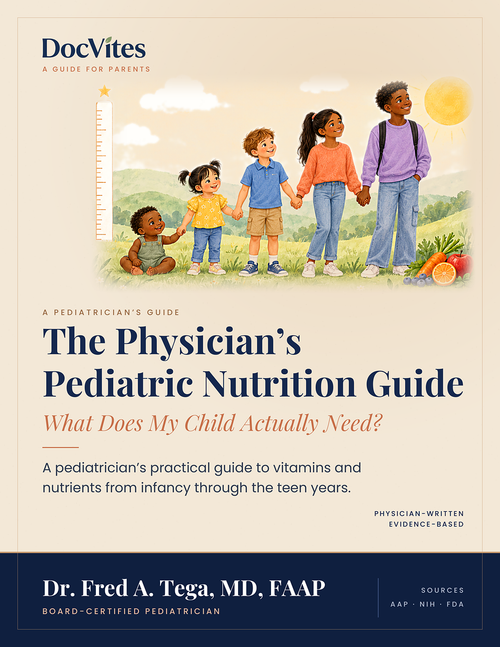
Free from Dr. Tega
Get The Physician’s Nutrition Guide, Dr. Tega’s free PDF on nutrient needs, labels and the questions to bring to your pediatrician.
Educational information only. Articles do not replace individualized medical advice. Product labels and clinical guidance should be used for individual supplement decisions.