


Prebiotics and probiotics are often grouped together in marketing, but they are not the same. Understanding the distinction helps families evaluate a food or supplement without turning a broad “gut health” message into a medical promise.
Prebiotics are substrates used by microorganisms
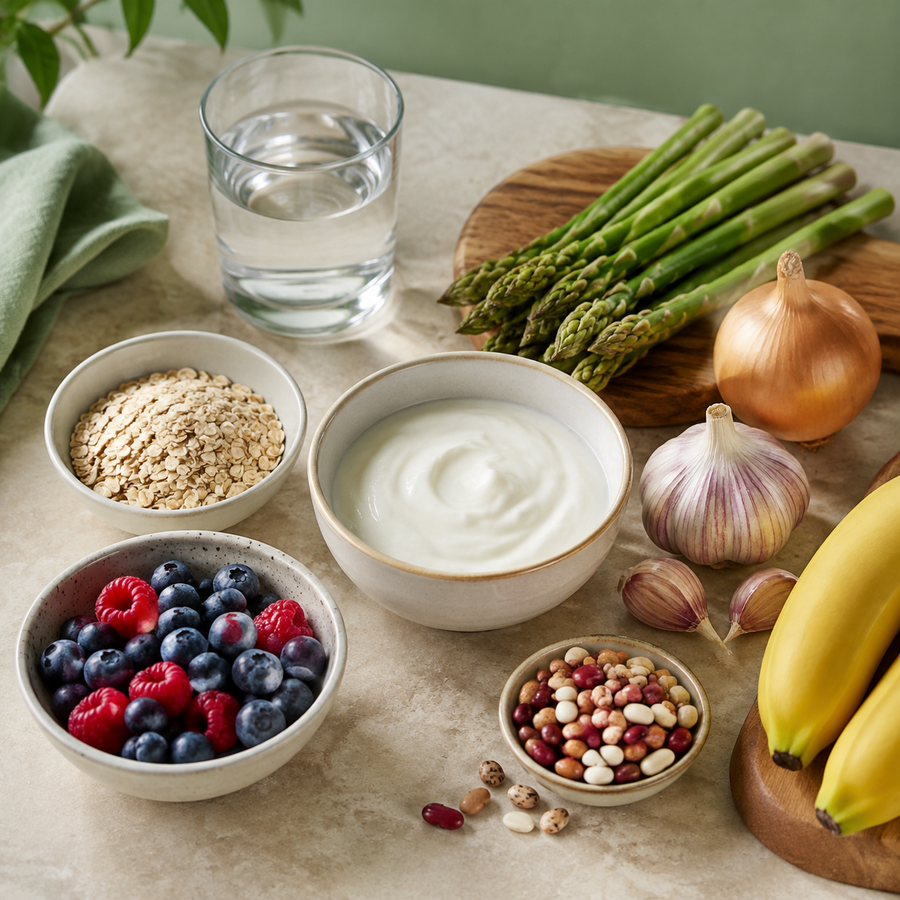
Many prebiotics are fermentable fibers or related carbohydrates. Foods such as onions, garlic, asparagus, bananas, oats, beans and other fiber-rich plants can contribute substrates used by intestinal microorganisms. Increasing fermentable fiber quickly can also cause gas, bloating or changes in stool pattern for some children.
Probiotics are live microorganisms
A probiotic is identified by its organism and, when relevant, its strain. Evidence involving one strain, dose, age group or health outcome should not automatically be applied to a different product. The words “contains probiotics” do not establish a specific clinical benefit.
Food-first remains a reasonable foundation
For most healthy children, a varied diet that includes fiber-rich plant foods is the starting point. Yogurt and other fermented foods may contain live cultures, but products differ and not every fermented food meets the scientific definition of a probiotic.
What the evidence can and cannot say
Research on probiotics in children is condition- and strain-specific. Some uses have evidence in defined circumstances, while many broad claims about immunity, digestion or “balancing the microbiome” go beyond what can be concluded for an individual product. Routine use is not automatically necessary for every child.
Use additional caution in vulnerable children
Parents should talk with the child’s pediatrician before using a live microbial supplement when a child is seriously ill, immunocompromised, medically complex or was born very preterm. Product identity, storage conditions and expiration also matter for live organisms.
American Academy of Pediatrics / HealthyChildren.org: Nutritional Supplements, Vitamins & Immunity
American Academy of Pediatrics: Caution With Probiotics in Preterm Infants
NIH NCCIH: Probiotics—Usefulness and Safety
FDA: Structure/Function Claims
Educational information only. This article is not individualized medical advice. Product needs vary by age, diet and health history; follow the finished product label and discuss individual supplement decisions with the child’s pediatrician.