



A little clarity. A healthier childhood.
More confidence.
Less second-guessing.
The vitamin aisle is full of promises. Start with a pediatrician’s perspective. Get Dr. Tega’s free guide to what your child actually needs—and discover a new place for your parenting questions.
Free PDF • No purchase required • Written for parents
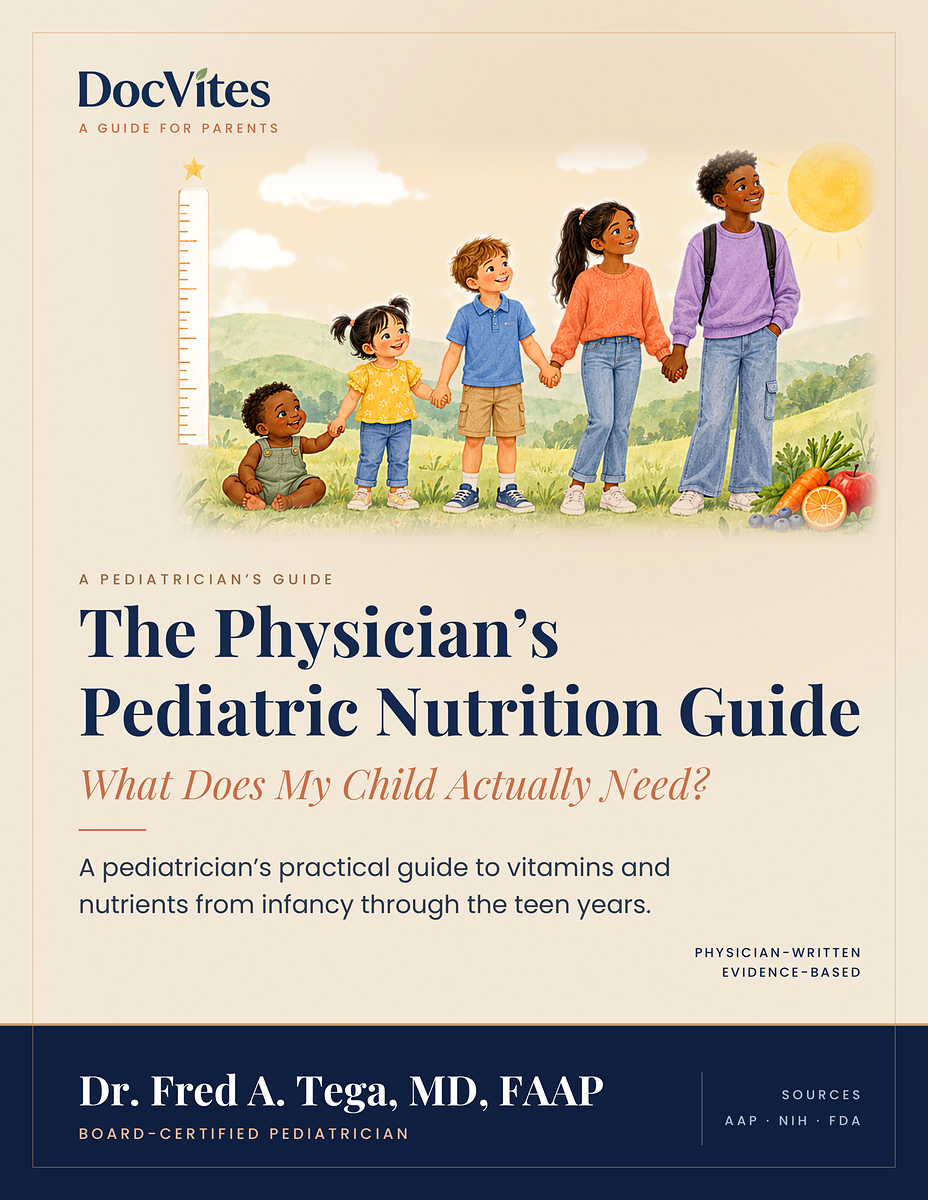
Inside the Physician’s Guide
The questions behind the questions.
Sixteen short chapters that turn the vitamin aisle into a few clear questions about your own child.
-

Every stage has its own needs.
Explore age-specific nutrient considerations, reference tables and the changing nutrition questions that come with infancy, childhood and the teen years.
The takeaway: Start with your child’s age and eating patterns—not the biggest number on a label.
-
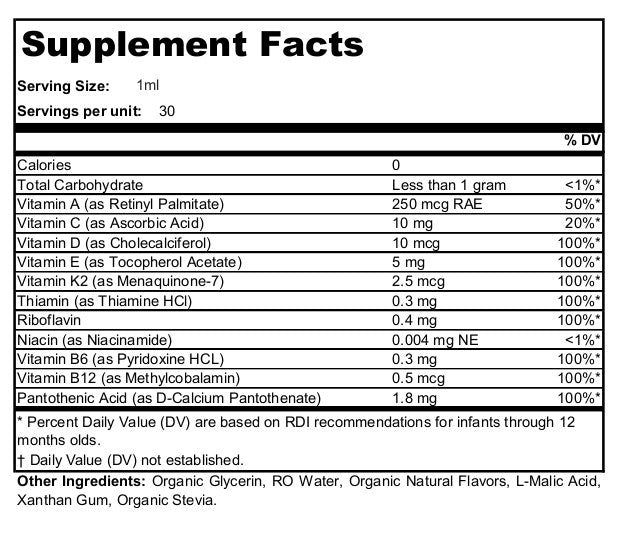
Look past the front of the bottle.
Understand Supplement Facts panels, serving sizes and the difference between useful product information and persuasive packaging.
The takeaway: Know what to look for before comparing children’s supplements.
-

“More” deserves a second look.
Learn why upper limits, overlapping products, age-appropriate formats and safe storage belong in every supplement conversation.
The takeaway: A supplement decision is also a safety decision.
-

Make your next visit more useful.
Bring five thoughtful questions to your pediatrician and turn broad nutrition concerns into a conversation about your own child.
The takeaway: The best next step starts with an informed conversation.
Your complimentary copy
A clearer place to start.
Get The Physician’s Nutrition Guide and approach the next nutrition decision with better questions and a little more confidence.
- A practical reference from infancy through the teen years
- Clear explanations of nutrient needs and labels
- Questions to bring to your child’s pediatrician
MD, FAAP · Board-Certified Pediatrician
A free resource for your family
Send me the guide.
A practical PDF, ready to keep and revisit.
A little more clarity, starting now
Your guide is ready.
Open your copy below. New subscribers will also receive an email from DocVites. While you’re here, meet Ask Dr. Tega.
Open my free guideYour next conversation
Meet Ask Dr. Tega
Also from Dr. Tega
Ask Dr. Tega, the podcast.
Your guide is a starting point. Continue the conversation with Dr. Tega about everyday health, nutrition, and the questions that come with raising children.
A few helpful answers
Before you begin.
Is the guide free?
Yes. The Physician’s Nutrition Guide is a free PDF from Dr. Fred Tega. No purchase is required. Signing up adds you to DocVites emails, and you can unsubscribe at any time.
How do I get my copy?
Enter your email in the form above and select “Get my free guide.” Your download page opens right away. New subscribers also receive the guide in their DocVites welcome email.
What ages does the guide cover?
Infancy through the teen years. It explains how nutrient needs change with age and includes reference tables for each stage.
What will I learn from it?
How to read a Supplement Facts panel, how serving size and % Daily Value relate to your child’s age, why more is not always better, and five questions to bring to your child’s pediatrician.
Does every child need a vitamin?
Not necessarily. The guide explains how age, diet and health history shape a child’s nutrient needs, so you can have a clear conversation with your child’s pediatrician.
Who wrote the guide?
Dr. Fred A. Tega, MD, FAAP, a board-certified pediatrician with more than 20 years of clinical experience and the founder of DocVites.
For educational purposes only. The guide does not replace individualized medical advice from your child’s healthcare professional.