
Ingredient Science
The B Vitamins—B1, B2, B3, B5, B6, Biotin, Folate and B12
A practical guide to the eight B vitamins in current DocVites multivitamin formulas, including normal metabolic roles, food sources and form-labeling context.
Pediatric Nutrition Library
Evidence-informed pediatric nutrition articles designed to help families understand age, diet, nutrients, ingredients and supplement decisions more clearly.

Offer new foods again and again.Many children need 8 to 15 tries before they accept a new food.Browse by age
Showing: Ingredient Science Clear filter ×
DocVites Ingredient Science
Explore the vitamins, minerals, prebiotic fiber and probiotic organisms used across current DocVites formulas. Each guide separates established nutrient physiology from product claims, with food-first context and practical label-reading guidance.
Ingredient Science
A practical guide to the eight B vitamins in current DocVites multivitamin formulas, including normal metabolic roles, food sources and form-labeling context.
Ingredient Science
What vitamin K1 does in normal physiology, where children obtain it from food and why supplement use should be kept distinct from newborn vitamin K prophylaxis.
Ingredient Science
A clear guide to vitamin E’s normal antioxidant role, food sources, fat-soluble vitamin safety and DocVites label context.
Ingredient Science
What vitamin C normally does in children, where food provides it, how it affects nonheme iron absorption and why immune-boosting claims need caution.
Ingredient Science
A pediatric, food-first guide to vitamin A: its normal roles in vision and cell development, sources, safety and how to read it on a supplement label.
Ingredient Science
An AAP-, NIH- and FDA-aligned guide to vitamin D: age-specific intake context, D3 source, serving size and where vitamin D appears across current DocVites fo...
Ingredient Science
What copper does in normal physiology, how it interacts with zinc and iron-related pathways, and why balance matters in pediatric supplementation.
Ingredient Science
A pediatric guide to zinc’s normal roles in growth, protein and DNA synthesis and immune function, with food sources and total-intake safety context.
Ingredient Science
Why iodine matters to normal thyroid hormone production and development, where food provides it, and why both too little and too much can be a problem.

Free from Dr. Tega
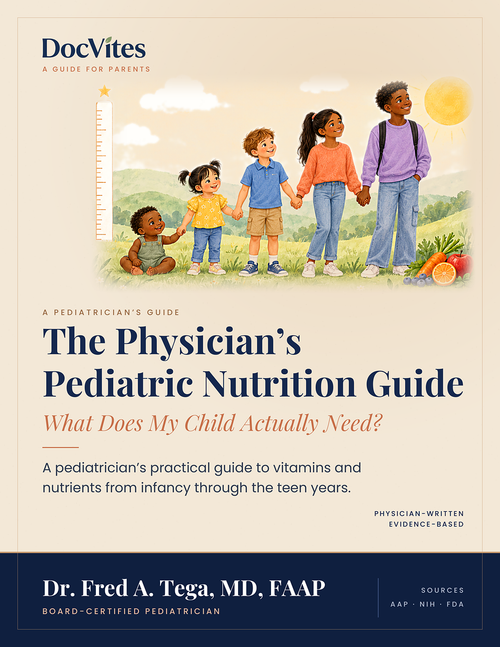
Get The Physician’s Nutrition Guide, Dr. Tega’s free PDF on nutrient needs, labels and the questions to bring to your pediatrician.
Educational information only. Articles do not replace individualized medical advice. Product labels and clinical guidance should be used for individual supplement decisions.