



From the Pediatrician
Added Sugar, Gummies and Children’s Supplement Labels
How to evaluate added sugar, gummy formats, dental exposure and the rest of a children’s supplement label without overstating one feature.
SafetyRead article
Pediatric Nutrition Library
Evidence-informed pediatric nutrition articles designed to help families understand age, diet, nutrients, ingredients and supplement decisions more clearly.

 Offer new foods again and again.Many children need 8 to 15 tries before they accept a new food.
Browse by age
Showing: 4–18+ Clear filter ×
From the Pediatrician
How to evaluate added sugar, gummy formats, dental exposure and the rest of a children’s supplement label without overstating one feature.

From the Pediatrician
A cautious, food-first explanation of prebiotics, probiotics, strain specificity and why broad gut-health promises deserve scrutiny.

From the Pediatrician
An attainable school-morning framework built around sleep, breakfast, hydration, preparation and consistency.

From the Pediatrician
A practical framework for looking beyond a formulation claim to the child’s age, diet, serving size, evidence and finished label.
From the Pediatrician
How to distinguish an ordinary preference from a dietary restriction that merits closer review of growth and nutrient intake.
From the Pediatrician
What families should know about vitamin B12 sources, fortified foods and reliable intake when animal foods are limited.
From the Pediatrician
Why bone nutrition depends on food patterns, vitamin D, physical activity and age—not one nutrient in isolation.
From the Pediatrician
A food-first framework for protein, vitamin B12, iron, zinc, calcium and vitamin D in vegetarian and vegan childhood diets.
From the Pediatrician
How to read serving size and % Daily Value without mistaking a label number for an individualized recommendation.
From the Pediatrician
Practical steps for preventing dosing mistakes, duplicate ingredients and accidental supplement ingestion.
Ingredient Science
What copper does in normal physiology, how it interacts with zinc and iron-related pathways, and why balance matters in pediatric supplementation.
Ingredient Science
A pediatric guide to zinc’s normal roles in growth, protein and DNA synthesis and immune function, with food sources and total-intake safety context.
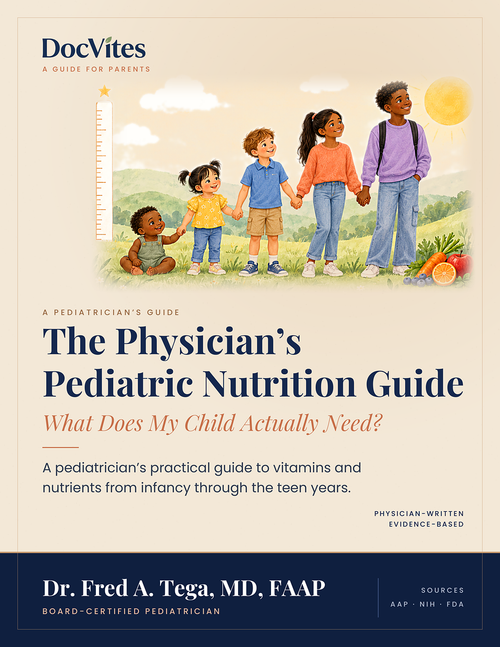
Free from Dr. Tega
Get The Physician’s Nutrition Guide, Dr. Tega’s free PDF on nutrient needs, labels and the questions to bring to your pediatrician.
Educational information only. Articles do not replace individualized medical advice. Product labels and clinical guidance should be used for individual supplement decisions.